

Table of Contents
The 21st century is unfolding at a pace unlike any era before it, marked by rapid technological change, global interconnectedness, and a shifting landscape of careers that evolve as quickly as they emerge. Students today must navigate a world where innovation is constant, artificial intelligence shapes industries, and challenges such as climate change, migration, and digital citizenship require thoughtful and informed responses. These realities highlight the need for an education system that goes far beyond memorisation—one that cultivates adaptability, critical thinking, and a capacity to understand and shape an unpredictable world.
As uncertainty becomes the new norm, education systems must evolve to prepare students not only with knowledge but with the skills, resilience, and global perspective to thrive. Traditional models of teaching can no longer keep pace with a world that demands flexible problem-solvers, creative thinkers, and lifelong learners. More than ever, schools must nurture individuals who are prepared to navigate ambiguity, collaborate across cultures, and meet real-world challenges with confidence.
The International Baccalaureate (IB) curriculum has emerged as one of the most future-focused frameworks in global education. Built on inquiry, international mindedness, and student agency, the IB program equips learners with the tools to think deeply, even as early as the Primary Years Program, act ethically, and engage meaningfully with complex issues. Its holistic structure ensures that students develop not only strong academic foundations but also the character and competencies necessary for navigating a rapidly changing world.
What Makes the IB Curriculum Unique
The ib curriculum stands apart for its emphasis on inquiry, conceptual understanding, and student-centred learning. Rather than focusing solely on content, the international baccalaureate encourages students to explore how knowledge connects across subjects and to think critically about real-world issues. This approach fosters a deep understanding that goes beyond rote memorisation, cultivating intellectual curiosity and a lifelong love of learning.
Its relevance to the blog topic lies in how uniquely positioned the IB is to prepare students for change. In a complex global environment, students must learn how to think, question, and synthesise information rather than simply recall facts. The IB’s structured yet flexible program nurtures the habits of mind that future leaders, innovators, and global citizens need, making it exceptionally suited to the demands of a rapidly evolving world.
Examples of the IB’s uniqueness can be seen in its interdisciplinary assessments, student-led inquiries, and the learner profile, which places values such as open-mindedness, principled action, and risk-taking at the centre of education. The Theory of Knowledge course challenges students to examine how knowledge is constructed, while the Extended Essay allows them to conduct independent research—a skill highly transferable to university and beyond.
Building Core Skills for a Dynamic Future
The IB program develops critical competencies essential for success in an unpredictable world, including communication, collaboration, problem-solving, digital literacy, and creativity. These skills are woven into daily learning experiences, enabling students to refine them through authentic inquiry and collaborative exploration. The emphasis on reflection further encourages self-awareness and adaptability—traits crucial for navigating new challenges.
This subject matters significantly because building such future-ready skills is central to preparing students for constant change. As industries shift and new technologies emerge, students must be able to learn continuously, analyse information critically, and innovate with confidence. The ib education model ensures that students build these capabilities systematically, making them well-prepared for the dynamic demands of the 21st century.
There are numerous examples of IB students applying these skills in meaningful contexts, such as during group projects that require collaborative problem-solving, digital media assignments that build communication and technical proficiency, or design-based tasks that nurture creativity and innovation. CAS experiences also deepen these skills by pushing students to take initiative and engage in personal and community challenges.
Preparing Students for Global Citizenship
A defining feature of the international baccalaureate is its commitment to promoting international mindedness and cultural understanding. Students learn to appreciate diverse perspectives, engage with global issues, and develop empathy for communities different from their own. This equips them with the mindset needed to operate in an increasingly interconnected and multicultural world.
Its importance to the blog topic stems from how essential global citizenship is in a rapidly changing world. From addressing climate issues to navigating international cooperation, students must understand their role within global systems. IB education empowers them to think critically about world challenges and recognise their ability to make positive contributions.
Examples of global citizenship development include interdisciplinary units that explore sustainability, service learning opportunities that connect students with local and global communities, and discussions that challenge them to consider ethical implications of global events. Students may participate in cultural exchanges, model United Nations activities, or service initiatives that foster leadership rooted in empathy and responsibility.
From Classroom to Real-World Application
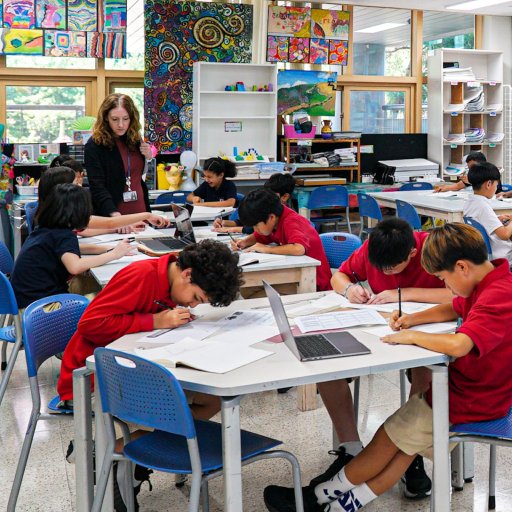
A core strength of the ib curriculum lies in its emphasis on real-world application. Learning is not confined to textbooks; instead, students apply their knowledge to authentic scenarios through inquiry projects, community-based activities, and experiential learning opportunities. This approach ensures that academic concepts gain relevance and that students build transferable skills through hands-on experiences.
This subject is deeply tied to the blog’s message because real-world application is essential for preparing students to navigate change. When learning is meaningful and contextualised, students gain the confidence to solve real problems and connect their understanding to broader issues. This prepares them for future careers, challenges, and opportunities that require adaptability and innovation.
Examples include science experiments that investigate local environmental concerns, mathematics units that analyse real data sets, and humanities inquiries that examine historical patterns to make sense of current global events. CAS projects and community partnerships further bridge classroom learning with real-world contexts, reinforcing students’ sense of agency and responsibility.
IB Education in South Korea: The Dwight School Seoul Example
Dwight School Seoul exemplifies how ib schools in south korea bring the IB vision to life through personalised learning, experiential opportunities, and a strong global outlook. The school’s approach integrates the strengths of the international baccalaureate with a commitment to nurturing each student’s unique potential. Through the full IB continuum, students engage in inquiry-driven learning, develop global awareness, and build the skills needed to thrive in a rapidly changing world.
This subject’s importance lies in demonstrating how IB education is implemented in real settings that prioritise future readiness. Dwight School Seoul shows that the IB framework is not simply an academic model but a holistic system that empowers students to discover their passions, reflect on their growth, and contribute meaningfully to their communities.
Examples include student-led projects that address local issues, interdisciplinary units that celebrate Korea’s rich cultural context, and CAS initiatives that build leadership and empathy. Dwight’s personalised learning pathways and emphasis on global citizenship further illustrate how the IB prepares students for the demands of modern life.
Conclusion: Preparing Today’s Learners for Tomorrow’s World
The International Baccalaureate curriculum equips students with the academic rigour, future-ready skills, and global mindset needed to thrive in a world defined by rapid change. Through inquiry, reflection, international mindedness, and real-world application, the IB empowers learners to face uncertainty with confidence and purpose. From the unique structure of the programs to the transformative experiences offered by schools like Dwight School Seoul, IB education stands as a powerful framework for shaping adaptable, compassionate, and forward-thinking individuals prepared to make a meaningful impact on the world ahead.
Dwight School Seoul prepares your child for the future with its IB Diploma Program.