Early Childhood Division (ECD)

At Dwight School Seoul’s Early Childhood Division (ECD), young learners thrive in a warm, nurturing, and engaging environment. Through personalized learning and a world-class, inquiry-based framework, we inspire curiosity, foster creativity, and build a strong foundation for lifelong learning.

Home > Academics > Lower School > Early Childhood Programme (ECD)

PYP in the Early Childhood Division

Where Curiosity, Belonging, and a Love of
Learning Begin

At Dwight School Seoul’s Early Childhood Division (ECD), we ensure that every child has a happy beginning to their IB early years learning journey. Children from Preschool (24 months) to Kindergarten learn through purposeful play, inquiry, and exploration rooted in the IB Primary Years Programme (PYP). Our preschool and kindergarten curriculum fosters curiosity, independence, meaningful relationships and a love of learning.

Dwight School Seoul Early Childhood Programme

Across Dwight School Seoul’s early childhood programme, learning is tailored to each child’s developmental stage, interests, strengths, and needs. Children develop confidence, independence, communication and social-emotional abilities through purposeful play, exploration, storytelling, movement, Nature Education and collaborative inquiry.

Nature Education is an essential part of the Early Years (EY) experience at Dwight School Seoul, nurturing curiosity, wellbeing, environmental awareness and a connection with nature. We integrate foundational literacy, numeracy and scientific thinking into meaningful experiences, alongside specialist learning in Art, Music, Physical Education, Korean, Library and our unit integrated Makerspace, allowing children to create, collaborate and discover their strengths.


Early Childhood Division Levels

Preschool 2 & 3

Age 2 & 3 (24 – 36 months)

A nurturing start where children build belonging, confidence, communication, and independence through purposeful play, sensory exploration, creativity, and hands-on learning.

Preschool 4

Age 4

Children grow as independent, confident, and curious learners through inquiry, imaginative play, collaboration, and meaningful experiences that build early literacy, numeracy, and problem-solving skills. At this stage, our Pre-Kindergarten curriculum builds the foundational skills children need for a smooth and confident transition into Kindergarten.

Kindergarten

Age 5

Curious inquirers develop confidence, resilience, independence, and strong academic foundations through hands-on exploration, collaboration, and inquiry-based learning across literacy, mathematics, and science. Our Kindergarten English (literacy) builds essential early literacy and communication skills, developing children’s reading, writing, speaking, and listening as they prepare for the next stage of their learning.

Early childhood education at Dwight is purposeful, playful, and centered on the needs of the children to promote inquiry, imagination, autonomy, and authentic relationships. Seoul’s first IB Continuum School, Dwight, provides a continuous journey from EY to PYP, MYP and DP. Families seeking a primary IB programme (elementary IB program) can transition seamlessly into the Primary Years Programme (PYP), building a solid basis for ongoing IB elementary education.

The transition to Grade 1 is a natural next step in each child’s PYP journey. Through purposeful routines, inquiry, collaboration, and increasingly independent learning experiences, children develop the academic, social, emotional, and self-management skills they need to embrace this transition with confidence.

By the end of Kindergarten, students have strengthened foundational literacy and numeracy alongside their ability to communicate, collaborate, solve problems, manage routines, make choices, and reflect on their learning.

Most importantly, they enter Grade 1 seeing themselves as capable learners — ready to ask questions, embrace challenges, build relationships, and continue discovering their own spark of genius.

Message from Early Childhood Division (ECD) Lead

Lucy Lee - ECD Lead

Welcome to the Early Childhood Division (ECD) at
Dwight School Seoul!

As ECD Lead, my guiding principle is simple: children thrive when they feel seen, valued, and appreciated for who they are. In our vibrant community, we blend the child-centered wonder of the Reggio-Emilia approach with the framework of the IB Primary Years Programme (PYP) Early Years. We know that young children learn best when they are fully engaged, happy, and taking the lead in their own discovery. Our Early Years Program is built around the four key features of the IB PYP Early Years: cultivating warm, trusting relationships, designing inspiring learning spaces, honoring play as joyful inquiry, and encouraging symbolic exploration as children express their unique ideas. By focusing on the learning process rather than just the final result, we empower students with meaningful agency and confidence. Together with our dedicated ECD team, we look forward to welcoming your family to a safe, caring space where your child’s natural curiosity is celebrated every day.

READ MORE

Why Families Choose Dwight School Seoul's Early Years Programme

IB Early Years Learning

IB Early Years Learning

Empowering young learners through inquiry, exploration, purposeful play, and meaningful relationships that nurture curiosity, confidence, and lifelong learning.

Personalized Learning

Personalized Learning

Personalized learning experiences recognize each child’s strengths, interests, needs, and individual pace, helping every learner develop confidence and independence.

Purposefully Designed Learning Spaces

Purposefully Designed Learning Spaces

Warm, engaging spaces encourage creativity, movement, collaboration, independence, and discovery, helping children explore ideas and build meaningful connections.

Learning at Dwight

International Community

From an early age, children develop global perspectives, empathy, and an appreciation for different cultures and viewpoints, nurturing the international-mindedness at the heart of an IB education.
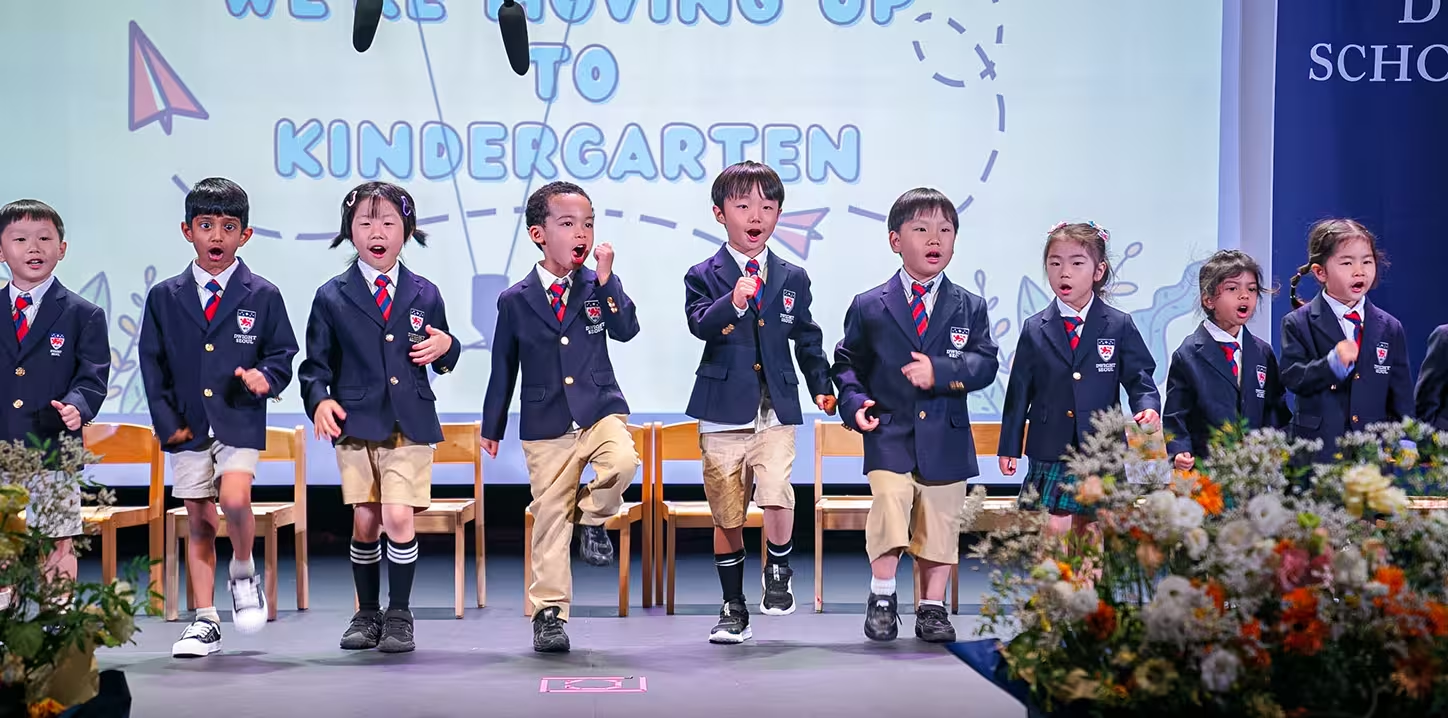
GALLERY

Gallery image 1

FREQUENTLY ASKED QUESTIONS

1. What age groups are included in Dwight School Seoul’s ECD programme?

Dwight School Seoul’s Early Childhood Division (ECD) welcomes children from Preschool 2–3 through Kindergarten. Preschool 2–3 is designed for our youngest learners, followed by Preschool 4 and Kindergarten, providing a nurturing and developmentally appropriate learning journey that prepares children for their transition into the Primary Years. Preschool 4 follows a Pre-Kindergarten curriculum rooted in the IB Primary Years Programme (PYP), building the foundational skills children need for a smooth and confident transition into Kindergarten.

2. Is the ECD programme part of the IB Primary Years Programme?

Yes. Dwight School Seoul’s Early Childhood programme is rooted in the International Baccalaureate (IB) Primary Years Programme (PYP). Children learn through purposeful play, inquiry, exploration, creativity, reflection, and meaningful relationships. Rather than relying on memorization, children are encouraged to ask questions, explore ideas, make connections, communicate their thinking, and increasingly take ownership of their learning. As Seoul’s first IB Continuum School, Dwight provides a connected educational journey from the Early Years through the PYP, Middle Years Programme (MYP), and Diploma Programme (DP).

3. What do children learn in Preschool and Kindergarten?

Learning in the Early Childhood Division is purposeful, playful, and centred on the child.

Through purposeful play, sensory exploration, storytelling, creative expression, movement, Nature Education, and collaborative inquiry, children develop communication, confidence, independence, creativity, and strong social-emotional skills.

Foundational skills in literacy, numeracy, and scientific thinking are intentionally woven into meaningful, age-appropriate learning experiences. As children progress, they are encouraged to ask questions, explore and test ideas, solve problems, make connections, and reflect on their learning, building the foundations for lifelong learning.

From an early age, children also learn to collaborate with others, appreciate different perspectives, and develop a growing sense of global citizenship. Through shared experiences and relationships, they begin to understand their place within their classroom, community, and the wider world.

4. How does Dwight support young children’s social-emotional development?

Through inquiry, purposeful play, stories, literacies, music, visual arts, movement and outdoor learning, children develop early language, social-emotional skills, independence, creativity, and a strong foundation in literacy and numeracy.

5. What is Nature Education at Dwight School Seoul?

Nature Education is an important part of the Early Years (EY) experience at Dwight School Seoul. Regular opportunities to learn in and through nature encourage children to observe, investigate, ask questions, take appropriate risks, and develop a sense of wonder about the world around them. These experiences support children’s curiosity, wellbeing, environmental awareness, scientific thinking, and growing sense of responsibility for the natural world.

6. Do children receive personalised attention?

Yes. Learning across Preschool and Kindergarten is designed around each child’s developmental stage, interests, strengths, and individual needs. Teachers carefully observe how children learn, respond to their interests and questions, and create opportunities that encourage appropriate challenge and growth. This personalised approach helps children develop confidence, independence, agency, and a positive sense of themselves as capable learners.

7. What specialist learning experiences are offered in ECD?

Learning is enriched through specialist experiences in Art, Music, Physical Education (PE), Korean, Library, and our unit-integrated Makerspace. These experiences are connected to classroom learning and provide children with different ways to create, investigate, collaborate, move, communicate, and express themselves. They also help children discover and develop their individual interests and strengths.

8. How does Kindergarten prepare children for Grade 1?

The transition from Kindergarten to Grade 1 is a natural next step in each child’s PYP journey. Through purposeful routines, inquiry, collaboration, and increasingly independent learning experiences, children strengthen foundational literacy and numeracy while developing communication, problem-solving, social-emotional, and self-management skills. By the end of Kindergarten, students are increasingly able to manage routines, make choices, collaborate with others, reflect on their learning, and approach new challenges with confidence. Most importantly, they enter Grade 1 seeing themselves as capable, curious learners who are ready to continue asking questions, making connections, and discovering their own spark of genius.

9. What makes Dwight School Seoul’s Early Childhood programme different?

Dwight combines the IB Primary Years Programme, personalised learning, purposeful play, Nature Education, specialist learning experiences, and a diverse international community to create a connected and engaging Early Years experience. Our approach develops the whole child. Alongside foundational academic learning, children develop creativity, curiosity, agency, empathy, independence, confidence, and international-mindedness. As part of an IB Continuum School, the approaches to learning established in our youngest classrooms continue to grow and deepen throughout a student’s Dwight education.

Inquire now to learn more about the International Baccalaureate Early Years Programme at Dwight School Seoul