

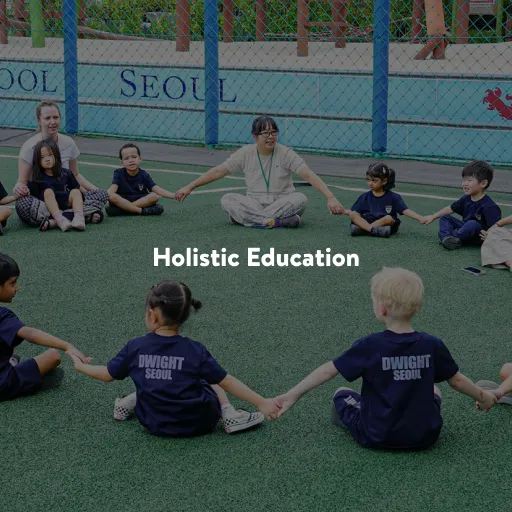
Introduction: Why Holistic Education Matters More Than Ever
The growing focus on student well-being is not a passing trend. It reflects a real shift in how families understand long-term success. Strong schools are now expected to help children become thoughtful learners, confident communicators, and balanced young people.
Research on social and emotional learning helps explain why. CASEL reports that hundreds of studies link SEL with stronger academic performance, mental wellness, healthy behaviours, and school climate. It also cites evidence that well-designed SEL interventions can improve academic performance by 11 percentile points, with follow-up gains still visible years later.
For parents researching school fit, that changes the conversation. The question is no longer simply, “Is this school rigorous?” It is also, “Is this school helping my child grow into a capable, grounded, and self-aware person?”
What Is Holistic Education?
Holistic education’s meaning is straightforward: it is an educational philosophy that nurtures the whole child by connecting learning, identity, relationships, well-being, and purpose.
A holistic approach usually includes four core areas:
- intellectual growth
- emotional and social development
- physical well-being
- creativity, agency, and character
So when parents ask about holistic development in education, they are really asking whether a school sees children as more than academic performers. A holistic school does not separate achievement from well-being. It treats both as essential.
In IB settings, this alignment is especially visible. The IB states that its learner profile highlights curiosity, compassion, knowledge, and skills, while also emphasising students’ social, emotional, and physical well-being.
Why Holistic Development in Education Matters
Children do not experience school in neat categories. A student’s confidence affects class participation. Their friendships affect belonging. Their sense of purpose affects motivation. Their physical and emotional health affects everything else.
That is why holistic education often produces benefits that parents can actually see at home:
1. It builds life skills beyond academics
Students learn how to organise themselves, work through setbacks, communicate ideas, and manage responsibilities.
2. It supports confidence without creating unhealthy pressure
Children are more likely to take intellectual risks when they feel known, supported, and safe.
3. It encourages creativity and collaboration
A well-rounded education gives students room to make, perform, design, reflect, and contribute.
4. It prepares students for a changing future
Knowledge still matters, of course. But so do adaptability, self-management, empathy, and critical thinking.
How IB Schools Support Holistic Education
For families comparing curricula, one of the strongest answers to what is holistic education can be found in how IB schools are designed.
Inquiry-based, student-centered learning
The IB Middle Years Programme is built to help students connect classroom learning with real-world contexts. The IB also describes the MYP as inquiry-based and student-centred, with approaches to learning that help students “learn how to learn”.
At Dwight School Seoul, the international middle years curriculum is presented in exactly this way: academically rigorous, broad and balanced, and intentionally connected to real-life application. Dwight School’s MYP pages emphasise critical thinking, reflective thinking, communication, and interdisciplinary understanding rather than narrow subject memorisation.
Personalised learning
Holistic education works best when schools recognise that children do not all learn in the same way or at the same pace. Dwight Seoul places personalised learning at the centre of its philosophy, describing education as tailored to each student’s strengths, interests, and learning style.
That matters for parents because “whole-child learning” should not be a slogan. It should change how teaching is delivered.
Well-being and personal growth
A genuinely holistic school must make room for student well-being, not treat it as an extra. Dwight School Seoul’s SPARK programme explicitly frames health and well-being as crucial to students’ educational journey and overall achievement.
Action, service, and leadership
IB schools also support holistic development by asking students to do something with their learning. In the MYP, service as action is a foundational element. In the Diploma Programme, Creativity, Activity, Service (CAS) is a core component. These structures help students connect learning with contribution, reflection, and responsibility.
Global-mindedness
The IB mission emphasises intercultural understanding and respect, and Dwight Seoul describes its own community as representing more than 50 countries while grounding learning in personalised learning, community, and global vision.
For internationally minded families, that combination can be a meaningful part of school fit.
Traditional Learning vs Holistic Education in IB Schools
Area | More traditional model | Holistic approach in many IB schools |
Academic focus | Subject coverage and test performance | Academic rigour plus application, reflection, and transfer |
Student role | Receives information | Inquires, discusses, creates, reflects |
Skills developed | Content knowledge first | Content knowledge plus communication, research, self-management, collaboration |
Well-being | Often treated separately | Integrated into school culture and support systems |
Real-world learning | Sometimes limited | Embedded through projects, service, contexts, and interdisciplinary work |
Definition of success | Grades and outcomes | Growth, character, readiness, achievement, and purpose |
Benefits of Holistic Education for Students
When holistic education is done well, students often leave school with more than strong transcripts.
They gain:
- stronger communication and critical-thinking skills
- better emotional resilience
- healthier self-awareness
- more confidence in collaboration
- a clearer sense of responsibility and agency
In the IB context, these outcomes are supported through learner profile attributes, approaches to learning, service, and applied inquiry. At Dwight Seoul, that philosophy is reinforced by a full International Baccalaureate Programme pathway, personalised learning, athletics, student-led clubs, and broader student-life experiences designed to support active, balanced growth.
What Parents Should Look For in a Holistic School
This is often where decision-making becomes more practical. When touring or shortlisting schools, parents should look beyond marketing language.
A useful parent checklist
Ask whether the school:
- can explain how well-being is supported, not just mentioned
- offers meaningful arts, athletics, service, and leadership opportunities
- helps students build independence and self-management
- balances challenge with support
- values student voice and relationships
- connects learning to real life
- can describe how teachers personalize instruction
At Dwight Seoul, parents will find clear signals in its stated pillars of personalised learning, community, and global vision, as well as in its SPARK, athletics, extracurricular, and student-led opportunities.
Common Mistakes Parents Make When Evaluating Holistic Education
Mistake 1: Assuming “holistic” means less rigorous
In strong schools, holistic education does not lower expectations. It broadens them.
Mistake 2: Focusing only on academics or only on happiness
The better question is whether a school can deliver both challenge and support.
Mistake 3: Looking only at program names
Two schools may both say “IB”, but the student experience can still feel very different depending on culture, teaching quality, and support systems.
Mistake 4: Underestimating school-home partnership
Children thrive when expectations, routines, and values feel aligned across both environments.
The Role of Teachers and Parents in Holistic Learning
Holistic growth does not happen through curriculum alone. It depends on adults who know how to guide children with consistency and care.
Teachers shape the daily experience through relationships, expectations, feedback, and classroom design. Parents reinforce that growth by creating a home environment that values reflection, effort, balance, and healthy routines.
The most effective partnership is not about pressure. It is about shared clarity: helping a child grow not only as a student but also as a person.
Challenges in Implementing Holistic Education
Holistic education is powerful, but it is not effortless.
Schools must balance academic standards with time for advisory, arts, athletics, service, and emotional development. Teachers need training to personalise learning well. Leaders must make sure support structures are visible, not hidden.
That is why parents should look for evidence of implementation, not just good language.
Key Takeaways
- Holistic education means educating the whole child, academically, emotionally, socially, physically, and creatively.
- The best holistic schools do not choose between rigour and well-being; they integrate both.
- IB schools are naturally aligned with this model through inquiry, reflection, global-mindedness, approaches to learning, and service.
- For families considering Seoul, Dwight School Seoul stands out naturally because its full IB continuum, personalised learning philosophy, and student-life programmes support whole-child development in practical ways.
- Parents should evaluate not only curriculum names, but also culture, relationships, support systems, and the day-to-day student experience.
Conclusion
The real value of holistic education is not that it sounds modern. It is that it reflects how children actually grow.
Students need knowledge, yes. But they also need confidence, belonging, resilience, curiosity, and opportunities to contribute. That is why holistic development in education matters so deeply, especially in a world that asks young people to be adaptable, thoughtful, and globally aware.
For parents exploring IB schools, this is where the model can feel especially compelling. At its best, an IB education does not simply prepare students for the next exam or the next school stage. It prepares them for life, with intellectual depth, emotional strength, and a clearer sense of who they are becoming.
FAQs
1. What is holistic education?
Holistic education is an approach that develops the whole child, including academics, emotional well-being, social skills, physical health, creativity, and character.
2. Why is holistic education important?
It helps students grow into capable, balanced young people rather than focusing only on grades or test performance.
3. What is the holistic education meaning in simple terms?
It means education that supports how children learn, feel, relate, grow, and contribute, not just what they memorise.
4. How do IB schools support holistic development in education?
IB schools support it through inquiry-based learning, reflection, global-mindedness, approaches to learning, service, and student agency.
5. How is holistic education different from traditional learning?
Traditional models can prioritise subject coverage first, while holistic education also emphasises well-being, skills, relationships, and real-world application.
6. What are the benefits of holistic education for students?
Common benefits include stronger communication, resilience, collaboration, self-management, and deeper engagement with learning.
7. Is holistic education less academically rigorous?
No. In strong schools, it adds depth and relevance to academic learning rather than replacing rigour.
8. Do IB schools only focus on academics?
No. The IB explicitly includes social, emotional, and physical well-being alongside cognitive development.
9. What should parents look for in a holistic school?
Look for evidence of personalised teaching, student support, meaningful extracurriculars, strong relationships, and a balanced school culture.
10. Why might Dwight School Seoul appeal to families looking for holistic education?
Because its full IB continuum, personalised learning philosophy, SPARK well-being focus, and broad student-life offerings align closely with what many parents mean when they ask for whole-child education.