

Table of Contents
Understanding how student-centred teaching shapes confidence, curiosity, and future-ready learners in IB schools.
Executive Summary
When parents research International Baccalaureate (IB) schools, they often focus on curriculum, academic results, and university destinations. Just as important, however, is understanding how students learn and how teachers support that learning.
This is where Approaches to Teaching (ATT) play a vital role. As a core component of the IB educational philosophy, , ATT guides how educators create engaging, inquiry-driven, and student-centred learning experiences across the IB continuum.
Rather than prioritising memorisation alone, ATT encourages students to ask questions, investigate ideas, collaborate with others, and develop a deeper understanding of the world around them. These evidence-based teaching approaches help students build critical thinking, communication, and self-management skills while fostering curiosity and a lifelong love of learning.
For families exploring international schools in Seoul, understanding IB Approaches to Teaching can provide valuable insight into what daily classroom learning looks like—and whether an IB education is the right fit for their child. It also offers a deeper understanding of how IB schools prepare students not only for academic success, but also for meaningful participation in an increasingly interconnected world.
What Are Approaches to Teaching (ATT)?
Quick Answer
Approaches to Teaching (ATT) are the International Baccalaureate’s research-informed teaching principles that guide how educators support inquiry, critical thinking, collaboration, reflection, and student-centred learning. ATT is used across the Primary Years Programme (PYP), Middle Years Programme (MYP), and Diploma Programme (DP) to help students become active participants in their own learning.
In simple terms, ATT focuses on helping students develop the skills, habits, and mindsets needed to become effective lifelong learners.
While traditional educational models often emphasise content delivery, ATT encourages students to engage with ideas, ask meaningful questions, apply knowledge in authentic contexts, and take ownership of their learning journey.
Through these teaching approaches, students learn not only what to think, but also how to think, learn, collaborate, and adapt in a rapidly changing world.
This philosophy is central to modern student-centred teaching and reflects the broader mission of the International Baccalaureate to develop knowledgeable, caring, and internationally minded young people.
Why Do IB Schools Use Approaches to Teaching?
The world students will enter after graduation is changing rapidly.
Universities and employers increasingly value skills such as:
- Critical thinking
- Collaboration
- Creativity
- Communication
- Adaptability
- Problem-solving
These competencies cannot be developed through memorisation alone.
The purpose of IB Approaches to Teaching is to create learning experiences that help students build both academic understanding and the transferable skills needed for future success.
Research into active and student-centred learning consistently shows positive impacts on student engagement, participation, and long-term understanding. When learners are actively involved in the learning process, they are more likely to retain knowledge, make meaningful connections, and develop confidence in their abilities.
By encouraging inquiry, reflection, collaboration, and independent thinking, ATT helps students become more engaged, self-directed, and resilient learners.
For parents, ATT represents an educational approach that prepares children not only for examinations but also for university, future careers, and lifelong learning in an increasingly complex and interconnected world.
The Core Principles of IB Approaches to Teaching
The IB identifies several interconnected teaching principles that guide learning across all programmes.
Inquiry-Based Learning
Inquiry sits at the heart of International Baccalaureate teaching.
Instead of beginning with answers, learning often starts with questions.
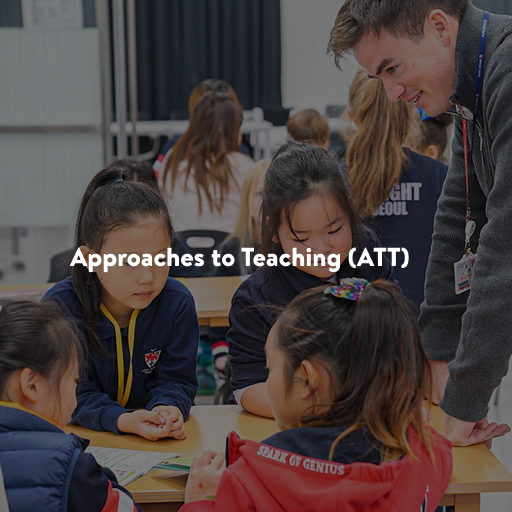
Students investigate issues, explore ideas, gather evidence, and construct understanding through guided discovery. Teachers act as facilitators who help students deepen their thinking and develop intellectual curiosity.
For example, rather than simply learning about environmental challenges, students may investigate how local communities can promote sustainability and evaluate possible solutions.
Conceptual Understanding
IB learning extends beyond facts and information.
Students explore transferable concepts such as the following:
- Change
- Identity
- Systems
- Relationships
- Sustainability
By understanding broader concepts, students can apply knowledge across different subjects and real-world situations.
This approach encourages deeper learning and stronger long-term retention.
Collaboration and Active Learning
Learning is often most powerful when it happens together.
IB classrooms regularly include the following:
- Group discussions
- Collaborative projects
- Peer feedback
- Team investigations
- Shared problem-solving activities
These experiences help students develop communication skills, empathy, leadership, and intercultural understanding.
Differentiated Instruction
Every learner is unique.
Effective student-centred teaching recognises that students have different strengths, interests, experiences, and learning preferences.
Teachers differentiate learning by:
- Providing multiple pathways to understanding
- Adjusting levels of support
- Offering varied assessment opportunities
- Creating personalised learning experiences
This helps ensure all students are appropriately challenged and supported.
Reflection and Continuous Growth
Reflection is a key component of ATT.
Students regularly consider the following:
- What they have learned
- How they learned it
- What challenges did they encounter
- How can they improve
This process helps students develop self-awareness, resilience, and a growth mindset.
What Does ATT Look Like in the Classroom?
One of the most common questions parents ask is the following:
“What does this actually look like day to day?”
The answer varies depending on age and programme, but the principles remain consistent.
Early Years and PYP
In early years to PYP , inquiry often emerges through exploration, play, storytelling, and hands-on learning.
Students might:
- Investigate natural phenomena
- Explore community roles
- Create solutions to simple problems
- Ask questions about the world around them
Learning is designed to nurture curiosity while building foundational academic skills.
Middle School (MYP)
As students grow, they take greater ownership of their learning.
Teachers encourage learners to:
- Conduct research
- Analyse evidence
- Collaborate on interdisciplinary projects
- Explore real-world issues from multiple perspectives
Students begin connecting knowledge across subjects and applying their learning in increasingly sophisticated ways.
High School and the IB Diploma Programme (DP)
In the Diploma Programme, students engage in advanced inquiry and independent learning.
Through the IBDP Programme, students develop university-level skills, including the following:
- Independent research
- Academic writing
- Critical evaluation
- Evidence-based argumentation
- Reflective thinking
These experiences help prepare students for success in higher education and beyond.
Student-Centred Teaching vs Traditional Teaching
Understanding the distinction between traditional instruction and ATT can help parents evaluate different educational approaches.
| Traditional Teaching | Student-Centred Teaching in IB Schools |
| The teacher primarily delivers information | Students actively construct understanding |
| Focus on memorisation | Focus on application and understanding |
| Limited student choice | High levels of student agency |
| One learning pathway | Differentiated learning experiences |
| Assessment measures learning | Assessment supports learning and growth |
| Emphasis on correct answers | Emphasis on inquiry and critical thinking |
Neither approach is inherently right or wrong. However, ATT is intentionally designed to help students develop skills needed in a rapidly evolving world.
Why ATT Matters for Student Success
Greater Engagement and Motivation
Students tend to be more invested in learning when they can explore meaningful questions and make connections to their own experiences.
This often leads to stronger participation and increased motivation.
Deeper Understanding
Students who investigate, discuss, analyse, and apply knowledge often develop a more sophisticated understanding of concepts than those who focus solely on memorisation.
Stronger Critical-Thinking Skills
ATT encourages students to:
- Evaluate evidence
- Consider multiple perspectives
- Challenge assumptions
- Develop informed conclusions
These skills are increasingly valuable in both academic and professional contexts.
Preparation for Lifelong Learning
Perhaps most importantly, ATT helps students become independent learners capable of adapting to new challenges throughout their lives.
Why ATT Matters for International Families in Seoul
Families relocating to Seoul often seek more than strong academics.
They are looking for a learning environment that helps children:
- Adapt to new cultures
- Build confidence
- Develop communication skills
- Form meaningful relationships
- Navigate a globalised world
The International Baccalaureate’s teaching philosophy supports these goals by encouraging students to engage with diverse perspectives and collaborate across cultures.
For internationally minded families, ATT can provide a strong foundation for both academic and personal growth.
How Parents Can Evaluate ATT During a School Visit
When visiting schools, curriculum descriptions only tell part of the story.
Classroom experiences reveal how teaching philosophies are implemented in practice.
Parent Checklist
Consider asking:
- Are students actively participating or primarily listening?
- Do students ask questions and share ideas?
- How is inquiry incorporated into learning?
- How do teachers personalise instruction?
- What opportunities exist for collaboration?
- How do students reflect on their learning?
- Can students explain why their learning matters?
- How are critical-thinking skills developed?
These questions can help families identify whether a school genuinely embraces student-centred learning.
How ATT Comes to Life at Dwight School Seoul
At Dwight School Seoul, student-centred learning is woven throughout the IB continuum.
Teachers design learning experiences that encourage students to explore authentic questions, collaborate across disciplines, and develop agency in their educational journey.
Whether students are investigating sustainability challenges in the Primary Years Programme, engaging in interdisciplinary learning in the Middle Years Programme, or conducting independent research through the Diploma Programme, learning is designed to connect academic understanding with real-world application.
This commitment to inquiry, personalised learning, and global citizenship reflects Dwight School Seoul’s mission to ignite the spark of genius in every child and prepare students to thrive in an interconnected world.
Families exploring educational options among South Korea’s top schools often look beyond curriculum frameworks to understand how students learn. Understanding Approaches to Teaching provides valuable insight into the classroom experience, revealing how schools foster curiosity, independence, critical thinking, and a lifelong love of learning. student experience.
Key Takeaways
- Approaches to Teaching (ATT) define how learning happens in IB schools.
- ATT promotes inquiry, conceptual understanding, collaboration, reflection, and differentiation.
- Student-centred teaching helps learners become active participants in their education.
- ATT supports both academic achievement and future-ready skill development.
- The approach is implemented across the PYP, MYP, and DP programmes.
- Parents should look for evidence of inquiry, student voice, and meaningful engagement when evaluating schools.
- Effective ATT implementation helps students become confident, independent, and lifelong learners.
Conclusion
Approaches to teaching are far more than a classroom methodology. They represent a philosophy of learning that encourages curiosity, independence, and meaningful engagement with the world.
For parents considering an International Baccalaureate education, understanding ATT offers valuable insight into how students develop not only academic knowledge but also the skills and dispositions needed for future success.
At Dwight School Seoul, these principles are embedded throughout the IB continuum, creating learning experiences that empower students to think critically, act purposefully, and take ownership of their learning. Through a commitment to personalised learning, global-mindedness, and the mission to ignite the spark of genius in every child, Dwight helps students develop the confidence, character, and skills needed to thrive both in school and beyond.
Frequently Asked Questions
Approaches to teaching are the IB's teaching principles that promote inquiry, critical thinking, collaboration, reflection, and student-centred learning.
It encourages students to take an active role in learning, helping them develop independence, confidence, and deeper understanding.
ATT helps students become engaged learners who can think critically, solve problems, and apply knowledge in meaningful ways.
ATT focuses on inquiry, collaboration, and student agency, while traditional approaches often focus more heavily on direct instruction and memorisation.
Research suggests that well-structured inquiry-based learning can improve engagement, critical thinking, and long-term understanding.
Yes. ATT is embedded across the PYP, MYP, and DP.
Students develop research, communication, self-management, and analytical skills that support university readiness.
Yes. Differentiated instruction helps ensure learning experiences are responsive to individual student needs.
Look for evidence of inquiry, collaboration, student voice, reflection, and active participation.
They help students develop the adaptability, creativity, critical-thinking, and communication skills needed to thrive in a changing world.