

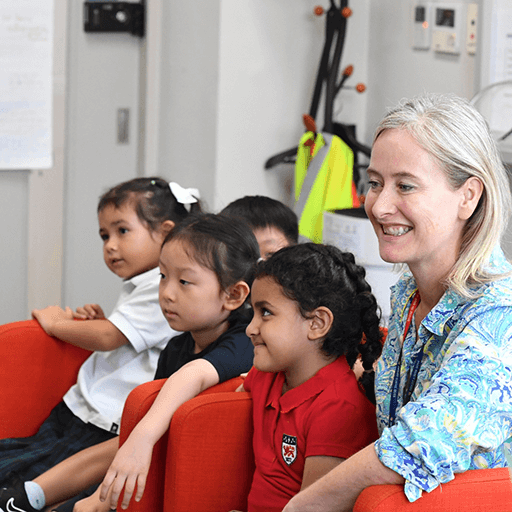
The International Baccalaureates (IB) Primary Years Programme (PYP) is a method of education made for kids aged 3 to 12 years old. This system concentrates on growing the whole child by using an inquiry-based, transdisciplinary curriculum.
The PYP motivates students to be active learners in their education process. This helps in promoting feelings of ownership and duty. If you put your kid into an IB PYP school, the education they receive is comprehensive and focuses on more than just academic accomplishments.
The PYP method fosters critical thinking, cooperation, and communication abilities. This prepares students for triumph in higher education and the worldwide job market. With learning experiences tailored to each student’s needs, the PYP gives children what they require to flourish on a constantly evolving planet.
1. Holistic Approach to Education
The IB PYP lays down a valuable and different educational programme and framework compared with other international programmes. This means that in addition to training and curriculum, there is provision for the student’s emotional, social, and physical development. Your child’s participation in an IB PYP school will make him or her a well-rounded person. As a result, they will be able to reason, solve problems, work in teams, and have a positive attitude towards learning. It gives them an all-around preparedness for meeting future challenges or embracing future opportunities in life.
The PYP places a significant focus on a child’s whole development. It enables their biases and helps them develop or refine whatever it is that they find interesting. Your child will develop his/her practical skills through activities that address topical problems. They will be able to speak assertively and comprehend other people’s ideas and points of view.
Your child is taught to have respect for other people and to feel empathy towards them in the process of executing the program. All together, the PYP gives harmony to the education system and helps the child in all aspects of life.
2. Inquiry-Based Learning
Inquiry-based learning is a teaching technique that allows kids to bring up questions and familiarise themselves more deeply.
In an IB PYP school, your child is taught how to think for himself or herself and think critically. Besides, it assists them in problem-solving and instils the desire to learn in the children. This is because it prepares your child for real-life problems and makes them or her ready to face them head-on.
Inquiry allows your child to be more active as a student. This makes him or her more confident and imaginative. This is a very important foundation that will help them in their future careers.
3. Personalised and Student-centred Learning
The IB Primary Years Programme (PYP) is aimed at making education personalised according to the child’s needs and preferences. The IB PYP curriculum aims to produce well-rounded students and allows for children’s interests and achievements at their own pace.
Teachers use the individual approach that involves establishing effective relationships with learners. This is to develop programs that raise learning potential while fostering the learners’ talents and passions. This approach ensures that your child receives the effective support needed to perform well throughout his/her education.

4. Strong Foundation for Future Education
Starting with an IB PYP school for your child is valuable in preparing a base for future schooling. The PYP allows for critical thinking, problem-solving, and group work. All these skills are crucial to master before progressing to the next higher grades and even in the future. Your child will learn to seek information and come up with ideas on his own. This helps them in dealing with the various difficulties of getting through middle school and high school.
Moreover, the IB PYP curriculum also develops positive attitudes to learning that can be carried on for a lifetime. All these skills are developed to ensure that your child becomes more productive in the academic realm and future education.
Conclusion
It is a wise choice if a parent can afford to put his or her child in an IB PYP school. The IB PYP curriculum provides a comprehensive framework of inquiry that develops the child as a whole person.
Your child is going to work on thinking skills, work in a team, and develop their creativity. These will help them in their future assignments in academic terms and other endeavours in life. Inquiry-based learning displayed here promotes curiosity and love for learning.
If you opt for the PYP, you are providing your child with the best foundation on which he or she can succeed. It not only defines their course of education but also their character. This is built in moulding responsible, caring citizens. This programme is your child’s future.