

Table of Contents
Introduction
Academic growth is a lifelong journey. It begins long before formal tests and continues well beyond report cards. For parents, the goal is not to control every outcome, but to create the conditions that allow children to think deeply, work steadily, ask questions, and grow in confidence over time.
That is why educational development looks different at every age. A three-year-old needs language, play, and emotional security. A ten-year-old benefits from structure, reading habits, and encouragement. A teenager needs trust, challenge, and the opportunity to become more self-directed. Across all stages, children do best when home and school work in partnership. Research on parent involvement and the home learning environment continues to show a meaningful connection between family engagement and student success.
Understanding Academic Growth Across Different Ages
Academic growth is not only about grades. It includes language development, problem-solving, self-management, resilience, collaboration, and the ability to apply learning with confidence.
Age group | Common developmental focus | How parents can help |
Early childhood | Language, social-emotional growth, early numeracy, curiosity | Read aloud, talk often, use play and routines as learning moments |
Primary years | Literacy, numeracy, attention, habits, confidence | Build routines, encourage questions, praise effort, stay in touch with teachers |
Middle school | Organisation, identity, deeper thinking, independence | Offer structure without over-managing, discuss goals, normalise challenge |
High school | Academic rigour, time management, reflection, future planning | Support independence, reduce unnecessary pressure, help students plan and prioritise |
This age-appropriate approach matters because the support a child needs at age five is very different from what helps at age fifteen. UNICEF emphasises reading, everyday conversation, and play as powerful tools in the early years, while parent-involvement research suggests that support remains important throughout a child’s educational journey. .
How to Support Your Child’s Learning at Every Stage
Encourage curiosity and exploration
Children learn best when learning feels meaningful. Ask open-ended questions. Let them explain how they solved a problem. Notice what they are interested in and connect those interests to books, projects, museums, nature, current events, or daily life. Curiosity is often the beginning of strong academic growth.
Build strong study habits
Good habits matter more than occasional bursts of effort. A predictable homework or reading time, a quiet workspace, and simple routines help children understand that learning is part of daily life. The University of Delaware recommends a set “quiet time” for homework or reading and notes that children are more likely to follow rules they help create.
Promote independence and resilience
Supporting learning does not mean rescuing children from every difficulty. When parents step back appropriately , children learn to persist, reflect, and recover from mistakes. That is especially important in adolescence, when students need both guidance and growing increasing ownership of their work.
Maintain open communication
Children are more likely to stay engaged when they feel heard. Ask about what they are learning, not just the grades they receive . Stay connected with teachers. Notice changes in motivation, confidence, or wellbeing before they become bigger challenges. .
The Importance of Early Childhood Education
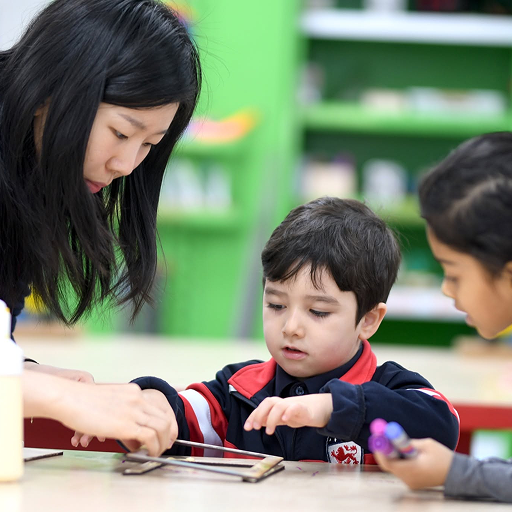
Early childhood education lays the foundation for later academic growth. In these years, children develop the building blocks through literacy, numeracy, communication, self-regulation, and social confidence. Just as importantly, they begin to form their identity as learners.
At Dwight School Seoul, the Early Childhood Division serves children aged 2 to 6 and is designed around inquiry-led play-based learning within the IB Primary Years Programme (PYP) early years framework. The school describes this stage as one where structured inquiry, guided exploration, and age-appropriate experiences support each child’s development.
For parents comparing schools, this matters. Strong early childhood education should not feel narrow or overly pressured. It should feel joyful, language-rich, and purposeful. A well-designed, Montessori kindergarten curriculum can help families think carefully about whether an early years setting values exploration, independence, and child-centred learning in meaningful ways.
Creating a Home Environment That Encourages Learning
A supportive home learning environment does not need to be elaborate. It needs to be steady.
Start with a few essentials:
- a daily routine
- a calm place to read or study
- regular conversation at home
- access to books
- screen boundaries that protect attention
- encouragement that focuses on effort, strategy, and growth
Research suggests that the quality of the home environment is associated with stronger academic outcomes and that emotional support and cognitive stimulation can make a measurable difference over time.
Common Challenges Parents Face
“My child is losing motivation.”
Look beneath the surface. Motivation often drops when work feels too easy, too hard, or disconnected from purpose. Rebuild momentum through small wins, encouragement, and clearer routines.
“There is too much going on.”
Children need balance. Extracurricular activities can enrich development, but overscheduling can reduce rest, reflection, and academic focus.
“My child learns differently.”
That is not a weakness. It is a reminder to look for a school environment that combines academic rigour with personalised learning. Dwight School Seoul positions its programme around inquiry-led, skills-based learning and a personalised approach across the IB continuum, from the early years through Upper School.
For older students, families should also look closely at how a school’s [high school curriculum] supports both challenge and continuity. At Dwight school Seoul, Upper School includes the IB Middle Years Programme in grades 9–10 and the IB Diploma Programme in grades 11–12, offering a clear academic progression.
Parent Checklist: What to Look For
A strong school-home fit often includes the following:
- age-appropriate challenge rather than pressure for its own sake
- teachers who know their children well
- a curriculum that builds skills progressively
- room for curiosity, creativity, and wellbeing
- clear communication with families
- support for both confidence and independence
Key Takeaways
Academic growth is strongest when support evolves with the child. Early childhood education should build joy, language, and foundational skills. Primary years should strengthen habits and confidence. Middle school should deepen independence with guidance still in place. High school should help students manage rigour, purpose, and future pathways. Across every stage, children benefit from consistent routines, meaningful conversation, and a school environment that sees them as capable learners.
Conclusion
Supporting your child’s educational development does not require perfection. It requires presence, consistency, and an understanding of what growth looks like at different ages. The most effective support is not always louder or more intensive. Often, it is steadier, warmer, and better matched to the child in front of you.
For families exploring school fit in Seoul, the most helpful question may be this: Does the environment support both achievement and the development of the whole child? When that answer is yes, academic growth becomes more than short-term performance. It becomes a lifelong foundation.
Frequently Asked Questions:
1. How can parents support their child’s academic growth at different ages?
By adjusting support to the child’s stage: play and language in the early years, routines in primary school, guided independence in middle school, and planning plus autonomy in high school.
2. Why is early childhood education important for long-term learning?
It builds the foundations for literacy, numeracy, confidence, communication, and social-emotional development.
3. What are the key stages of educational development in children?
Early childhood, primary years, middle school, and high school all bring different academic, emotional, and developmental needs.
4. How can I encourage my child to become an independent learner?
Offer support without over-correcting, ask reflective questions, and let your child take increasing responsibility for planning and problem-solving.
5. What daily habits help improve a child’s academic performance?
Consistent reading, a quiet study routine, sleep, organised materials, and regular conversation about learning.
6. How does Dwight School Seoul support academic growth?
Dwight School Seoul offers an inquiry-led IB continuum, with play-based early years learning, personalised support, and a clear academic progression through Upper School.