Primary Years Programme (PYP)
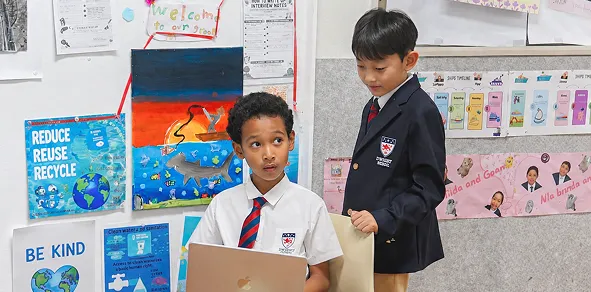
Dwight School Seoul’s Primary Years Programme (PYP) offers a dynamic, inquiry-based framework that fosters critical thinking and creativity. With a focus on global-mindedness and personal development, students build the knowledge and skills needed for future academic success.
Home > Academics > Upper School > Primary Years Programme
Primary Years Programme in Grade 1-5
At Dwight School Seoul, the IB Primary Years Programme (PYP) encourages students to be curious, confident, compassionate, and independent learners. From Grade 1 through Grade 5, children build strong academic foundations while exploring connections between themselves, their communities, and the wider world.
Children moving from our Early Years (EY) programme into Grade 1 continue their learning within a familiar IB approach. Guided by the IB Learner Profile and Dwight’s commitment to personalized learning, students are encouraged to ask questions, explore ideas, work with others, and discover their individual strengths.
Every child’s PYP journey begins with curiosity and the opportunity to ignite their spark of genius.
IB Primary Years Programme (PYP) at Dwight School Seoul
The IB Primary Years Programme (PYP) is an internationally recognized framework that places students at the center of their learning. At Dwight, students explore important concepts through inquiry, discussion, reflection, collaboration, and real-world experiences.
Learning is organized around six transdisciplinary themes, connecting Language, Mathematics, Science, Social Studies, Arts, and Personal, Social and Physical Education (PSPE).
Rather than seeing subjects as completely separate, students learn to recognize connections between them. They use what they know to explore new situations, work through problems, and take meaningful action. As they progress through the PYP, they become increasingly confident in applying their learning both inside and outside the classroom.
Growing Through the Primary Years
Grade 1
Building Foundations for Inquiry
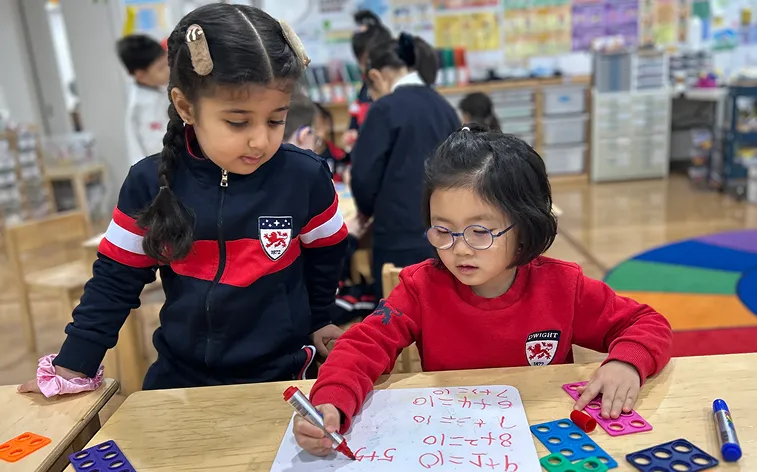
Students strengthen their literacy, numeracy, communication, and inquiry skills through hands-on learning. At the same time, they build confidence, independence, and a positive attitude toward learning.
Grades 2–3
Growing Confidence and Independence
Students begin exploring ideas in greater depth and taking more responsibility for their learning. Working independently and with others, they learn to share ideas, manage their time, make decisions, and work through challenges
Grades 4–5
Deepening Research, Leadership, and Readiness
Students take greater ownership of their learning as they move through the upper primary years. They develop research skills, explore different perspectives, work more independently, and take on leadership opportunities. These experiences prepare them for the next stage of their IB journey in the Middle Years Programme (MYP).
Why Choose the IB PYP at Dwight School Seoul?

Seoul’s First IB Continuum School
As Seoul’s first IB Continuum School, Dwight offers a connected educational journey through the Primary Years Programme (PYP), Middle Years Programme (MYP), and Diploma Programme (DP). Students develop knowledge, skills, and personal qualities at every stage, following a consistent educational philosophy from early years through graduation.
Inquiry-Based, Concept-Driven Learning
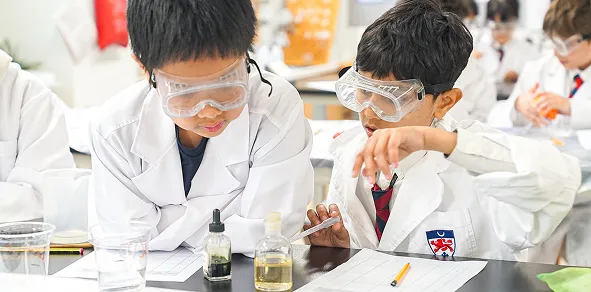
Learning begins with questions that encourage students to investigate concepts, explore different perspectives, and connect knowledge to real-life situations. This approach nurtures curiosity, creativity, critical thinking, and problem-solving while helping students take an active role in their learning.
Whole-Child Development
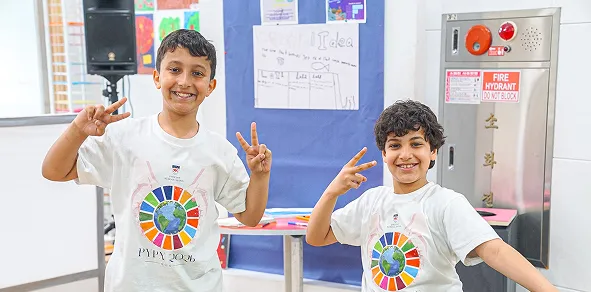
Education at Dwight goes beyond academics. Through everyday learning and the IB Learner Profile, students develop confidence, empathy, resilience, responsibility, and self-awareness. Social-emotional learning also helps children build positive relationships and feel a strong sense of belonging within the school community.
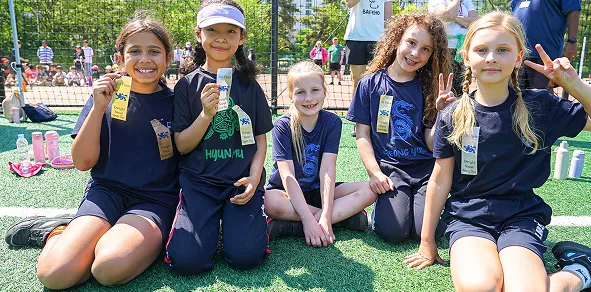
From PYP to MYP: Inspiring the Next Stage of Learning
Moving from Grade 5 to Grade 6 is an important milestone. Throughout the PYP, students gradually build the academic, social, and organizational skills they will need as they enter the Middle Years Programme.


Academic Readiness
Strong foundations in literacy and mathematics help students approach increasingly complex learning with confidence. They learn how to research, communicate their ideas, ask thoughtful questions, find evidence, and make connections across different subjects.
Social Readiness
Working with others is part of everyday learning. Students share ideas, listen to different viewpoints, and learn how to contribute to a group. Through these experiences, they build empathy, communication skills, and positive relationships with others.
Growing Independence
Students gradually take more responsibility for how they learn. They set goals, organize their work, manage their time, reflect on their progress, and make responsible decisions. These habits help them approach Grade 6 with greater confidence and independence.
By the end of Grade 5, Dwight students are ready for more than the next programme. They are prepared to continue growing as curious, capable, and internationally minded learners.
GALLERY
FREQUENTLY ASKED QUESTIONS
1. What is the IB Primary Years Programme at Dwight School Seoul?
The IB Primary Years Programme (PYP) at Dwight School Seoul is an internationally recognized, inquiry-based framework for students in Early Years (EY: Rooted in IB PYP(Primary Years Programme) to 5. It places students at the center of their learning, encouraging them to ask questions, investigate important concepts, reflect on their understanding, collaborate with others, and apply their learning in meaningful ways. Guided by the IB Learner Profile and Dwight’s commitment to personalized learning, the PYP develops strong academic foundations while nurturing curiosity, confidence, compassion, independence, and international-mindedness.
2. What subjects do students learn in the PYP?
Students develop knowledge, concepts, and skills across Language, Mathematics, Science, Social Studies, Arts, and Personal, Social and Physical Education (PSPE). Rather than learning each subject entirely in isolation, students make connections across disciplines through transdisciplinary Units of Inquiry. This allows them to explore significant concepts from different perspectives and apply their knowledge and skills in authentic, real-world contexts. Students also benefit from specialist learning experiences in areas including the arts, physical education, language acquisition, technology, and library, providing further opportunities to create, collaborate, communicate, and discover their individual strengths and interests. Across the PYP programme, these subject areas are woven together through inquiry rather than taught as separate disciplines
3. What are the six PYP transdisciplinary themes?
The PYP is organised around six transdisciplinary themes that explore concepts of global significance:
- Who We Are
- Where We Are in Place and Time
- How We Express Ourselves
- How the World Works
- How We Organise Ourselves
- Sharing the Planet
These themes encourage students to investigate meaningful questions and develop a deeper understanding of themselves, others, and the world around them.
4. How is the PYP different from a traditional primary curriculum?
The PYP encourages students to learn through inquiry, conceptual understanding , collaboration, reflection, and meaningful action. Rather than simply memorising information students ask questions, make connections across subject areas, and apply their learning to authentic real-life situations. As an International Baccalaureate Primary Years Programme (IB PYP) school, it takes a learning approach that encourages children to explore ideas, ask questions, and make connections between what they learn and the world around them. The focus is on developing understanding through inquiry, reflection, and practical learning experiences, rather than relying mainly on standardized tests. Compared with a conventional primary school curriculum, the PYP connects classroom learning to real-world understanding. Families weighing the international baccalaureate(IB) primary years programme (PYP) pros and cons will find that its main strengths lie in inquiry, conceptual understanding, and the real-world application of learning.
View More
5. How does the PYP prepare students for the MYP?
Throughout Grades 1–5, students progressively develop the academic, social, and self-management skills needed to transition confidently into the Middle Years Programme (MYP). Academically, students strengthen literacy and mathematics alongside research, communication, critical thinking, and conceptual understanding. Socially, they learn to collaborate, communicate effectively, navigate different perspectives, and contribute positively to their community. Students also develop increasing independence through goal-setting, organization, time management, reflection, and responsible decision-making. By the end of Grade 5, they are prepared to embrace the greater independence and opportunities of Grade 6 and continue their journey as curious, capable, internationally minded learners.
6. Why choose Dwight School Seoul for the PYP?
As Seoul’s first IB Continuum School, Dwight provides a connected educational journey through the Primary Years Programme (PYP), Middle Years Programme (MYP), and Diploma Programme (DP). Families benefit from a consistent educational philosophy centered on personalized learning, inquiry, conceptual understanding, whole-child development, international-mindedness, and meaningful action. Combined with Dwight’s diverse international community and rich specialist learning experiences, the PYP provides students with the foundations to thrive throughout their IB journey and beyond.
7. Begin Your PYP Journey at Dwight School Seoul
At Dwight School Seoul, the IB Primary Years Programme gives students the freedom to explore their interests and turn their questions into meaningful learning experiences. With an inquiry-based approach and support tailored to each child, students build a strong academic foundation while becoming more confident, creative, independent, and resilient. They also develop an understanding of different cultures and perspectives that helps them feel prepared for life beyond the classroom.
Inquire now to learn more about the International Baccalaureate Primary Years Programme at Dwight School Seoul